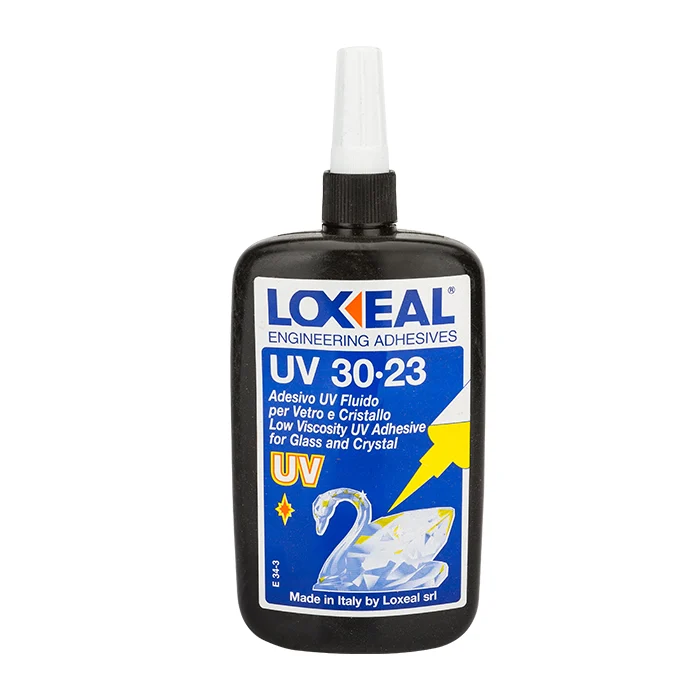
Product details
What this product is used for
Small-area glass-to-metal bonding with grade 30-21 and glass-to-glass bonding with grade 30-23. Confirm the joint design, substrate preparation, UV-light access and curing process before production use.
How to reduce bubbles in UV glass-adhesive bonding
Bubbles in a cured UV-glue joint are not only a cosmetic issue: they can reduce the effective bonded area and make bond quality inconsistent. For glass bonding, begin by checking substrate preparation and the full application-and-curing sequence.
Use a three-step approach. First, clean the bonding surfaces so they are free of oil, dust and moisture. Second, apply a thin, controlled bead from the centre outward to minimise trapped air; a 0.04–0.06 mm reference bond line may be used only where it is appropriate for the joint design and adhesive grade. Third, use staged UV curing: a brief low-power exposure can hold the assembly in position before final curing with the lamp at the recommended distance and time.
Fresh adhesive may contain transport-related bubbles. Store and allow it to stand in a cool, shaded place before use according to the product instructions. Always validate bond strength, cure time and appearance on representative samples, especially for structural, safety-critical or outdoor applications.
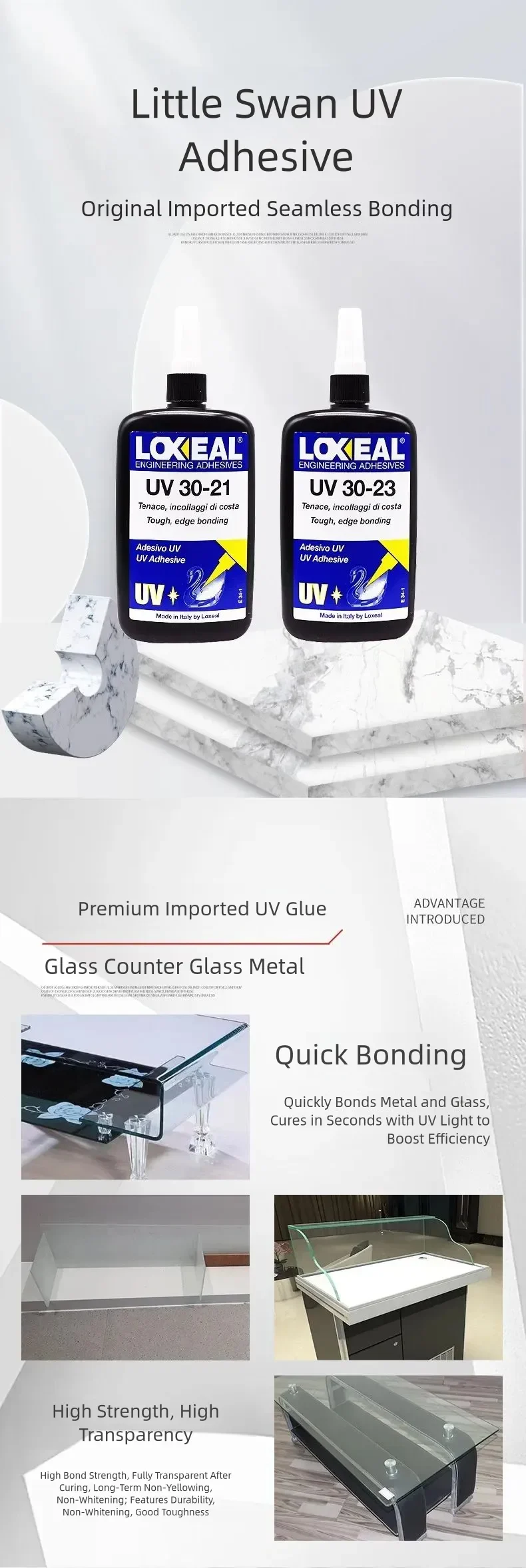
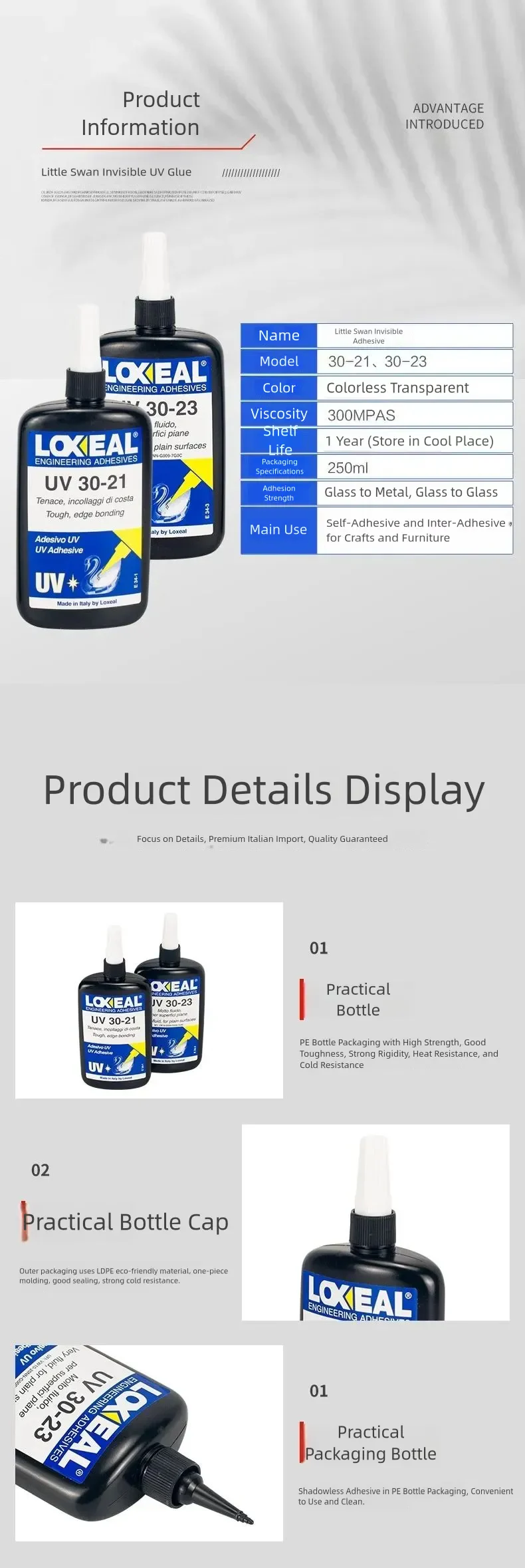
Product attributes
Packaging information
- 30-21 reference package: 6 × 3 × 20 cm; 360 cm³; approximate item weight 300 g.
- 30-23 reference package: 6 × 3 × 20 cm; 360 cm³; approximate item weight 300 g.
- Store in a cool, shaded place and check the manufacturer’s expiry and storage requirements before use.